Complexity Kills
Most firms don’t hit a scaling wall because they lack investment skill. They hit it when a clean five-model range quietly turns into twenty-five versions, split across platforms, wrappers, legacy constraints, ESG preferences, income tilts, and the bespoke exclusion that somehow became standard.
From there, the investment team stops being a decision function and becomes a production desk. Rebalancing turns into exception handling. Methodology updates drag because every change triggers the same chain reaction: platform checks, mapping, client impact, communications, governance records, sign-off, and workarounds.
The point isn’t that firms need more people. It’s that many are trying to scale a proposition without a scalable operating system behind it.
What scale actually means in an MPS
In a Model Portfolio Service (MPS) context, scale isn’t AUM. It’s the ability to support more clients, more variants, more constraints, and higher oversight demands without workload rising line-for-line. A simple way to see where pressure comes from is to treat scale pressure as a multiplication problem where scale pressure increases with the number of models, the number of variants, the number of constraints and cadence.
Most firms fixate on the first variable, more models, more risk levels, more choices. But the multipliers are what do the damage, particularly variants and constraints. That’s where governance gets messy and the work starts compounding. Add a modest increase in cadence, more frequent reviews, more responsive changes and suddenly the same team is spending more time pushing process than making investment decisions.
The operating system: decisions, control, production
If you want scale without adding headcount, you must separate investment decisions from production work. Not because production is unimportant, but because it can be systematised, while investment judgement is scarce and expensive.
Think of your MPS as an operating system with three layers:
- Investment design is the decision layer: objectives, risk targets, strategic allocations, permitted ranges, building blocks, and crucially the rules that define how portfolios should behave when conditions change. If those rules aren’t explicit, you don’t have a process; you have memory. And memory doesn’t scale.
- Governance is the control layer. It defines who can change what, when, and on what evidence. Here’s the dividing line: if you have to reconstruct the rationale after the fact, governance becomes labour. If evidence is produced as part of the workflow, governance scales. The difference is easy to miss in a small proposition and painful in a large one.
- Implementation is the production layer: monitoring, drift control, rebalancing logic, trade workflow, exceptions, and reporting. This is where scale often fails, not because the investment team is weak, but because the operating system drags senior people into operational firefighting. You feel it when a small methodology tweak turns into weeks of platform checks, wrapper workarounds, and manual reconciliation. Good monitoring and sensible AI support helps here, not by making investment calls, but by shrinking exception workload and producing consistent, reviewable outputs - drift breaches, concentration creep, liquidity limits, cost or turnover spikes.
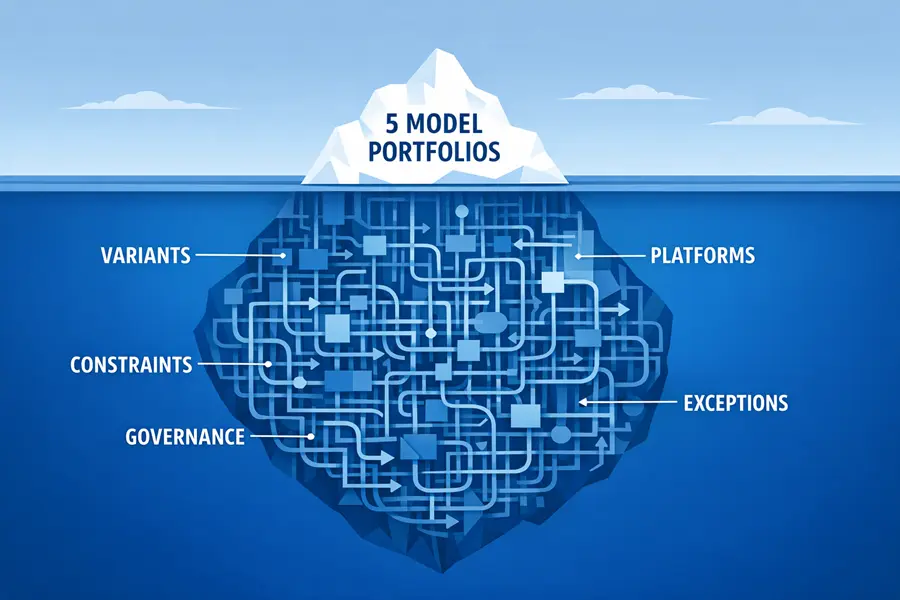 Figure 1 – When managing multiple portfolios, don’t forget to factor in all of the variants.
Where scaling actually breaks and why it feels inevitable
Scaling breaks when complexity outruns process. Variant creep is usually the first fracture: platforms differ, wrappers impose constraints, client segments demand overlays, and the model becomes a concept rather than a controlled object. One ETF becomes two substitutes, one balanced portfolio becomes three implementations, and advisers receive one narrative while clients experience different costs, liquidity and tracking.
From there, monitoring becomes judgment-by-exception, then governance becomes retrospective, and key-person dependency follows. The minimum viable fix isn’t more tools; it’s minimum infrastructure: a written rulebook per range, a finite approved variant taxonomy, clear triggers (review vs act), a defined rebalancing method that controls turnover and treats implementation costs as real, an exception log with owners and review dates, and a standard - what changed and why - pack that can be produced quickly, because if you can’t evidence change at speed, you don’t have scalable governance.
The five-line change-control
If you want one practical move that changes the trajectory, make this a standard output whenever a model changes.
The document is short by design. It should state what changed, why it changed (including the trigger and evidence), the expected impact (risk, cost, turnover, exposures), who approved it and when, and the implementation note (effective date, affected variants or clients, and the comms link advisers will use).
If you can’t produce this quickly, you don’t yet have a controlled operating system. You have memory and effort - and effort does not scale.
A practical 30 / 60 / 90-day rollout
This must be treated as operating model work, not a software rollout.
In the first 30 days, the goal is to define reality. Map every model and variant, including the unofficial ones that exist because a platform or wrapper forced the issue. Identify what’s genuinely driving complexity rather than what’s being blamed. Then draft a rulebook for one model range and define triggers and tolerances so monitoring becomes structured rather than constant.
By 60 days, the goal is to make governance automatic in the right sense: evidence produced as part of the workflow, not chased after the fact. Monitoring outputs should be standardised, exception logging should be in place, and the change-control one-pager should be the default artefact for every change. This is where you stop allowing the investment narrative to live only in inboxes and meetings.
By 90 days, the goal is enforcement. Define a finite approved variant set and make a hard rule: anything outside it is declined or requires explicit Investment Committee sign-off. Then prove you can execute methodology updates across approved variants consistently, with the ‘what changed and why’ pack generated as standard. The measure of success isn’t that you have more dashboards; it’s that change becomes repeatable, governable, and fast.
The rapid fire scalability test
If your Investment Committee asked for what changed in the last quarter, why it changed, the expected risk and cost impact, and which clients were affected, could you produce it in ten minutes and cleanly?
If the answer is no, you don’t yet have scalable infrastructure. You have effort.
ETF access isn’t the differentiator anymore. The differentiator is a governed system that absorbs complexity, evidences decisions, and executes change with discipline, without turning investment professionals into operational firefighters.
If you’re exploring how to scale model portfolio infrastructure without expanding internal headcount, email us directly at info@algo-chain.com.
Our Foundational Model Portfolio Masterclass series walks through the building blocks of scalable ETF-based portfolio architecture: Masterclass Series
Irene Bauer